
Patience Wins Every Time

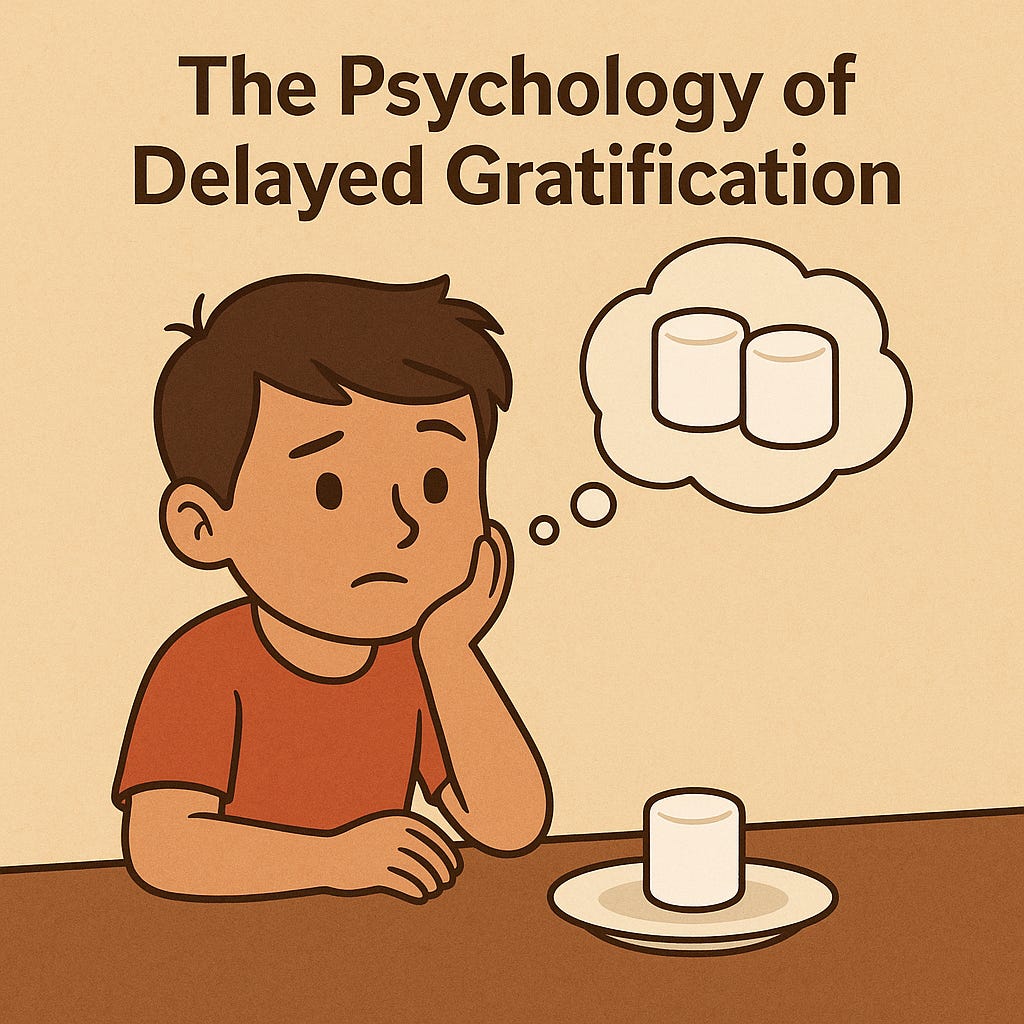
Imagine you’re a kid again. Someone places a fluffy marshmallow in front of you and says:
“You can eat it now… or wait 15 minutes and I’ll give you two.”
This famous experiment—the Stanford Marshmallow Test—was more than just a quirky childhood challenge. It revealed something profound about human psychology: our ability to delay gratification predicts long-term success. Kids who waited for two marshmallows often grew into adults who performed better in school, managed stress more effectively, and built healthier relationships.
But why? And what does philosophy from across the world teach us about mastering the art of waiting?
The Psychology: The Tug-of-War in Your Brain
When you face a marshmallow moment—whether it’s saving money instead of spending it, choosing a workout over Netflix, or waiting to launch a big idea—you’re really facing a battle between two brain systems:
The limbic system: your instant-gratification machine, craving pleasure now.
The prefrontal cortex: your wise planner, capable of imagining future rewards.
Self-control happens when the prefrontal cortex holds the reins, reminding you that “later” can be sweeter than “now.” This isn’t about willpower alone; it’s about training your brain to value future rewards.
Wisdom Across the World
Stoicism (Greece): Epictetus reminded his students that freedom comes from mastery over desires. To a Stoic, waiting is not suffering but strengthening the soul against impulses.
Buddhism (India, East Asia): Patience (kṣānti) is considered one of the perfections. By sitting with discomfort instead of scratching every itch, you learn that cravings lose their power over time.
Taoism (China): The Tao Te Ching whispers: “Nature does not hurry, yet everything is accomplished.” Waiting is not weakness—it’s alignment with the natural flow.
Bushidō (Japan): Samurai trained to delay reactions, knowing that a hasty strike born of impatience leads to defeat. Patience was a warrior’s edge.
Ubuntu (Africa): “I am because we are.” Waiting for the group to prosper rather than grabbing for yourself builds stronger communities and deeper trust.
A Fun Story:
Picture Maya, an entrepreneur offered a tempting corporate job. The salary glittered like that marshmallow. But she chose instead to invest her energy in building her own venture—hard work, uncertain returns, delayed gratification.
Her friends teased, “Why wait when the marshmallow is right there?”
Two years later, her company thrived. Her marshmallows didn’t just double—they multiplied into a whole bakery.
How You Can Apply This Today
Name the Marshmallow. Identify what your impulse wants now (sugar, scrolling, shopping).
Visualize the Bakery. Imagine the bigger reward that comes later if you wait.
Shrink the Wait. Break the delay into smaller steps—wait 10 minutes, then 30, then a day.
Create Friction. Make impulsive actions harder (hide the marshmallow, delete the app).
Celebrate the Wait. Each time you succeed, reinforce it with a small victory dance or note in a journal.
The Inspiring Truth
The marshmallow test wasn’t really about sugar. It was about life.
Every day you’re offered the choice between a marshmallow now… or a bakery later.
The psychology says: those who can wait, win.
Philosophy says: those who can wait, grow wise.
And life whispers: patience is power disguised as stillness.
So, next time you face your marshmallow moment, smile, breathe, and remember—you’re not just waiting. You’re training yourself to handle life’s biggest rewards.